A 783-part V6 at 1:1 on the FreeCAD kernel: the audit, the mechanism study and what is left open.
V6 engine
How it grew from the first model to the detailed V6 v2: 783 parts, 1:1, Duratec 30 class, 89 x 80 mm, function-checked.
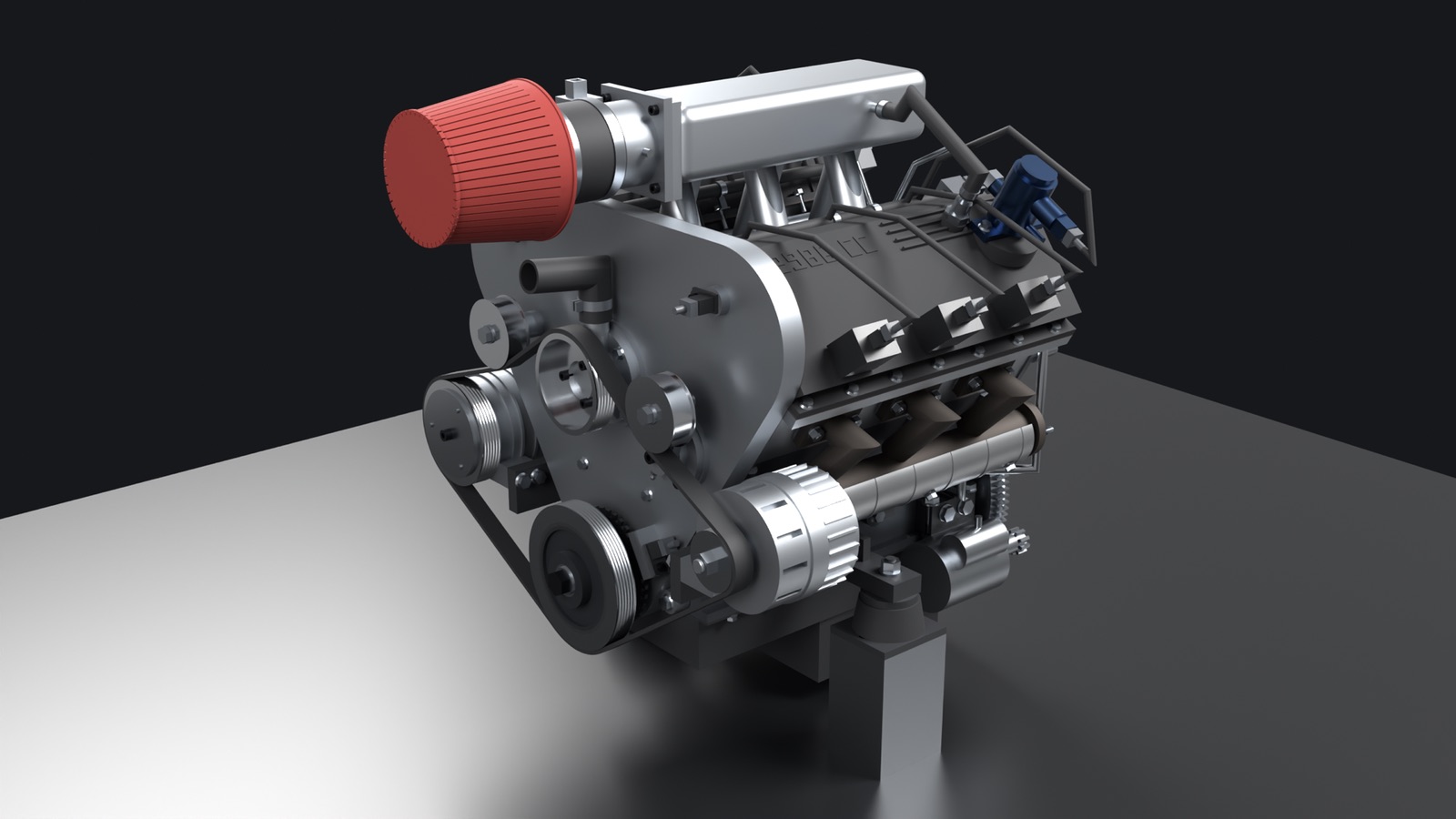
V6 v2, 783 parts at 1:1, 194.9 kg, on its two engine mounts: timing cover, 6-rib belt drive, air filter and 72 mm throttle body. v6v2-hero, 2026-10-06
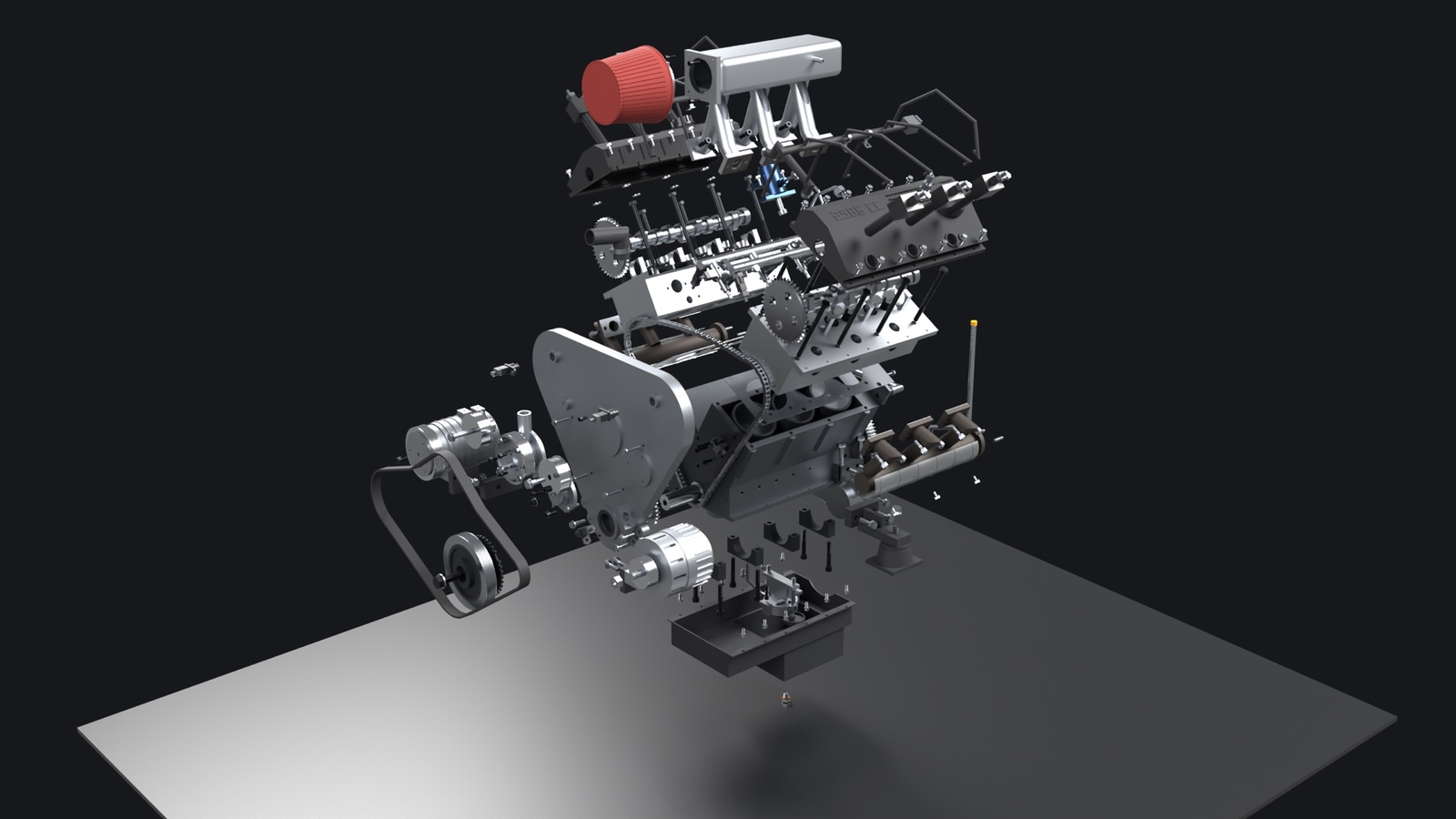
All 783 parts moved out along their groups' directions, every fastener a further 45 mm along its own axis over its hole. v6v2-exploded, 2026-10-06
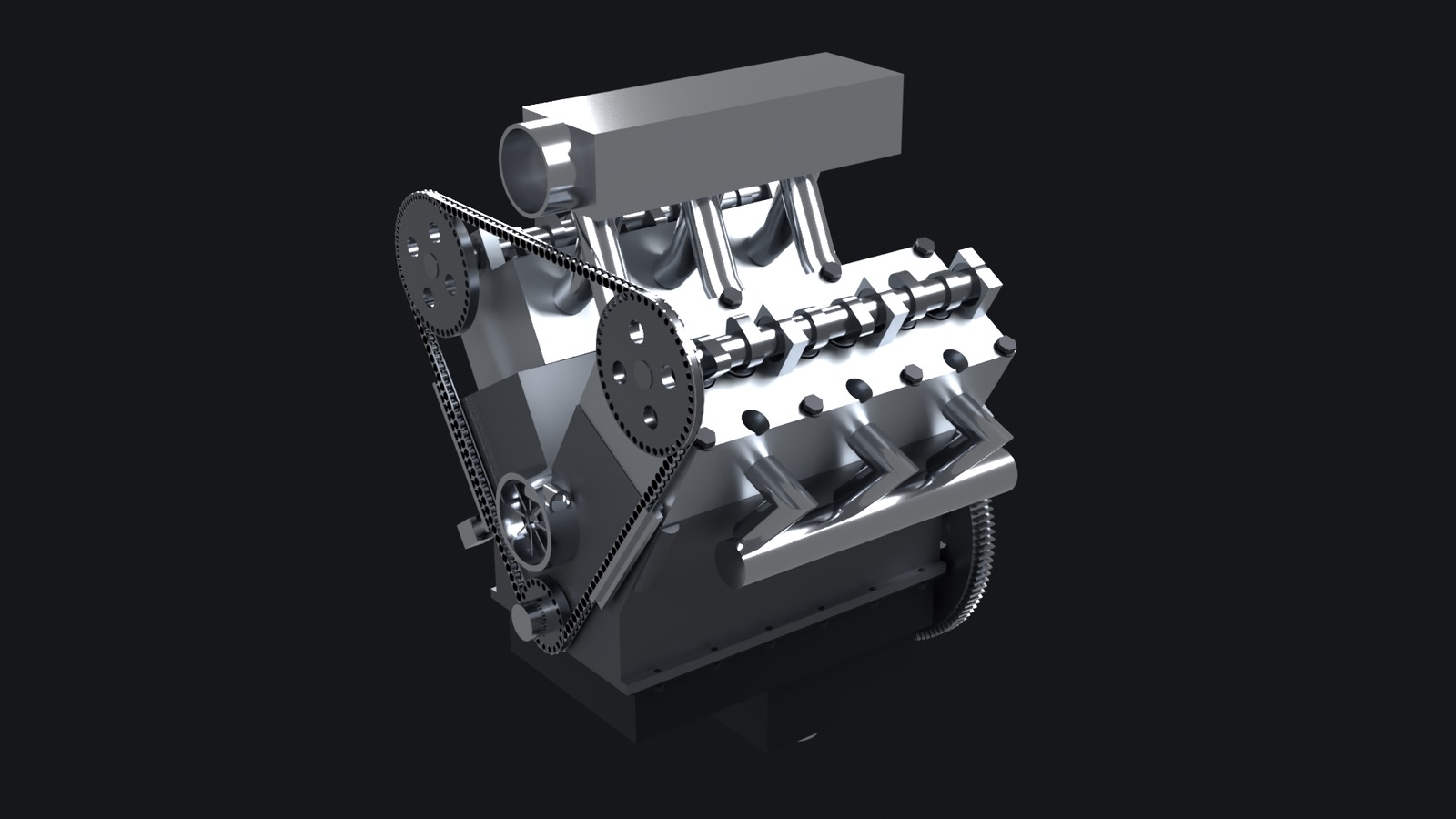
The second model, v6-az: 2.99 L, 60 degrees, 89 x 80 mm, with heads, camshafts, timing chain and manifolds. v6az-g-engine, 2026-09-30
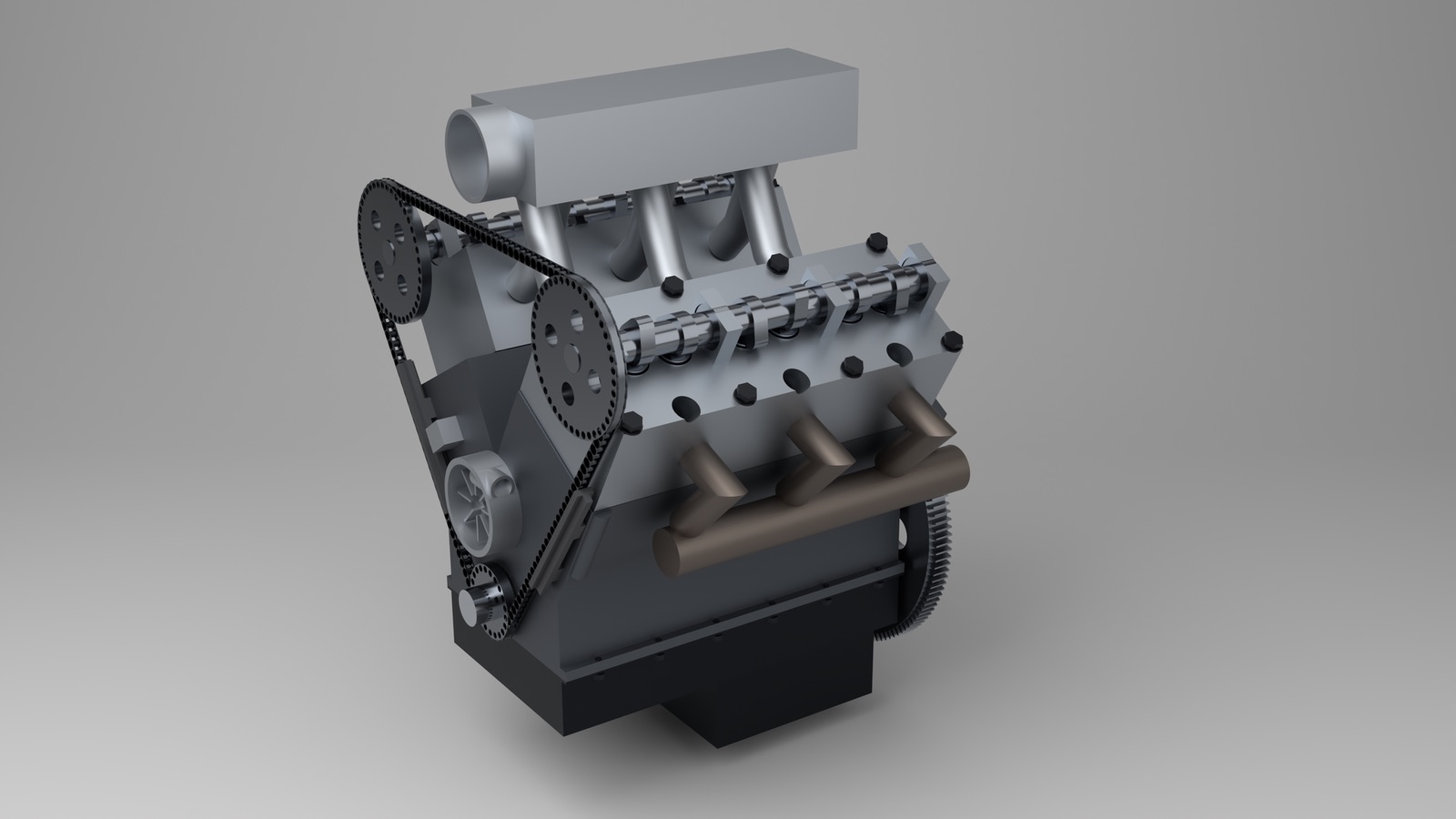
The first model, v6: the complete engine of 414 parts, with block-shaped manifolds and plain covers. v6-complete, 2026-09-29
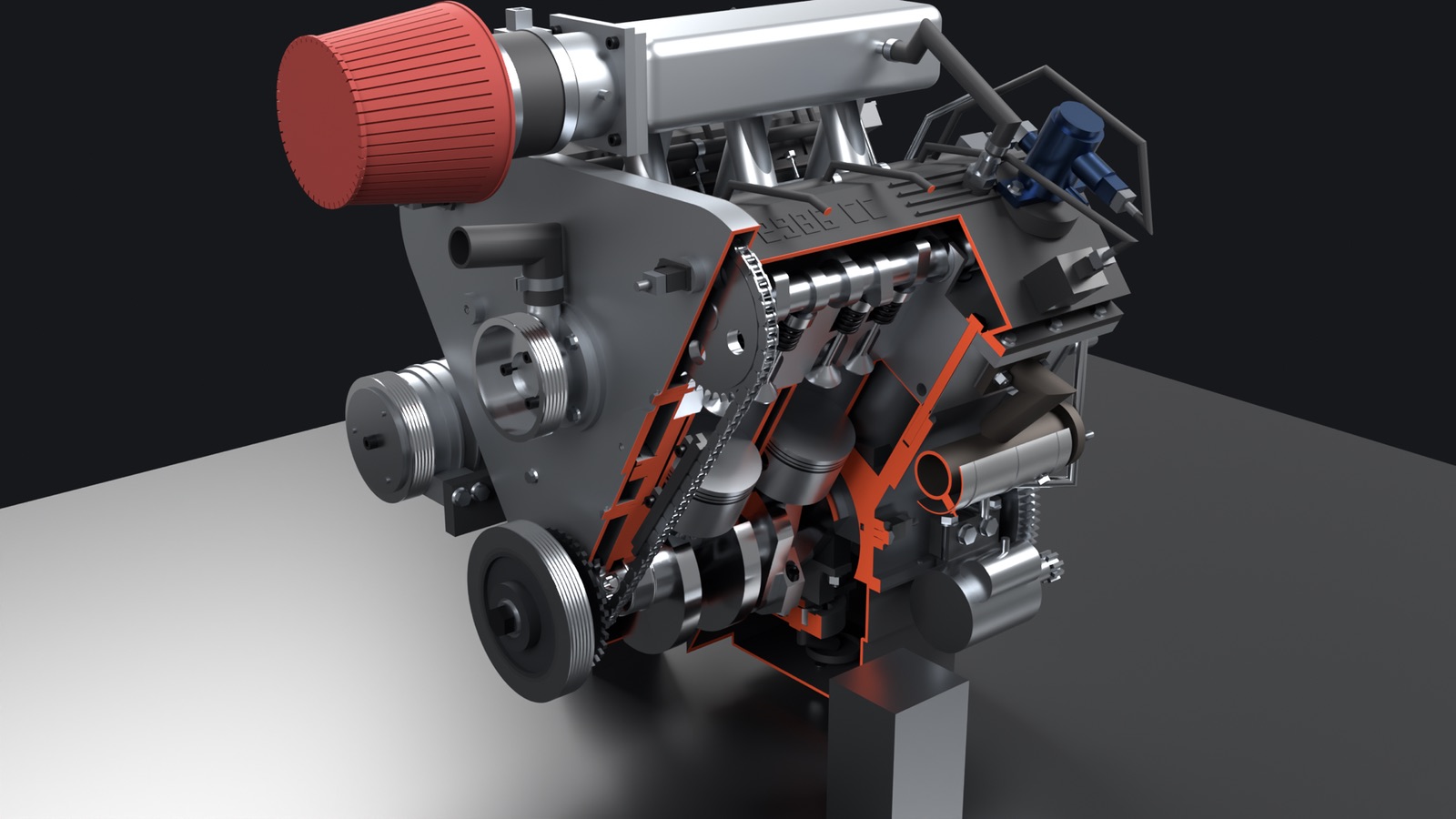
The front-left quarter cut away through bank A's bore plane: pistons, rods, crank, valves, cam and the 142-link chain stand whole. v6v2-cutaway, 2026-10-06
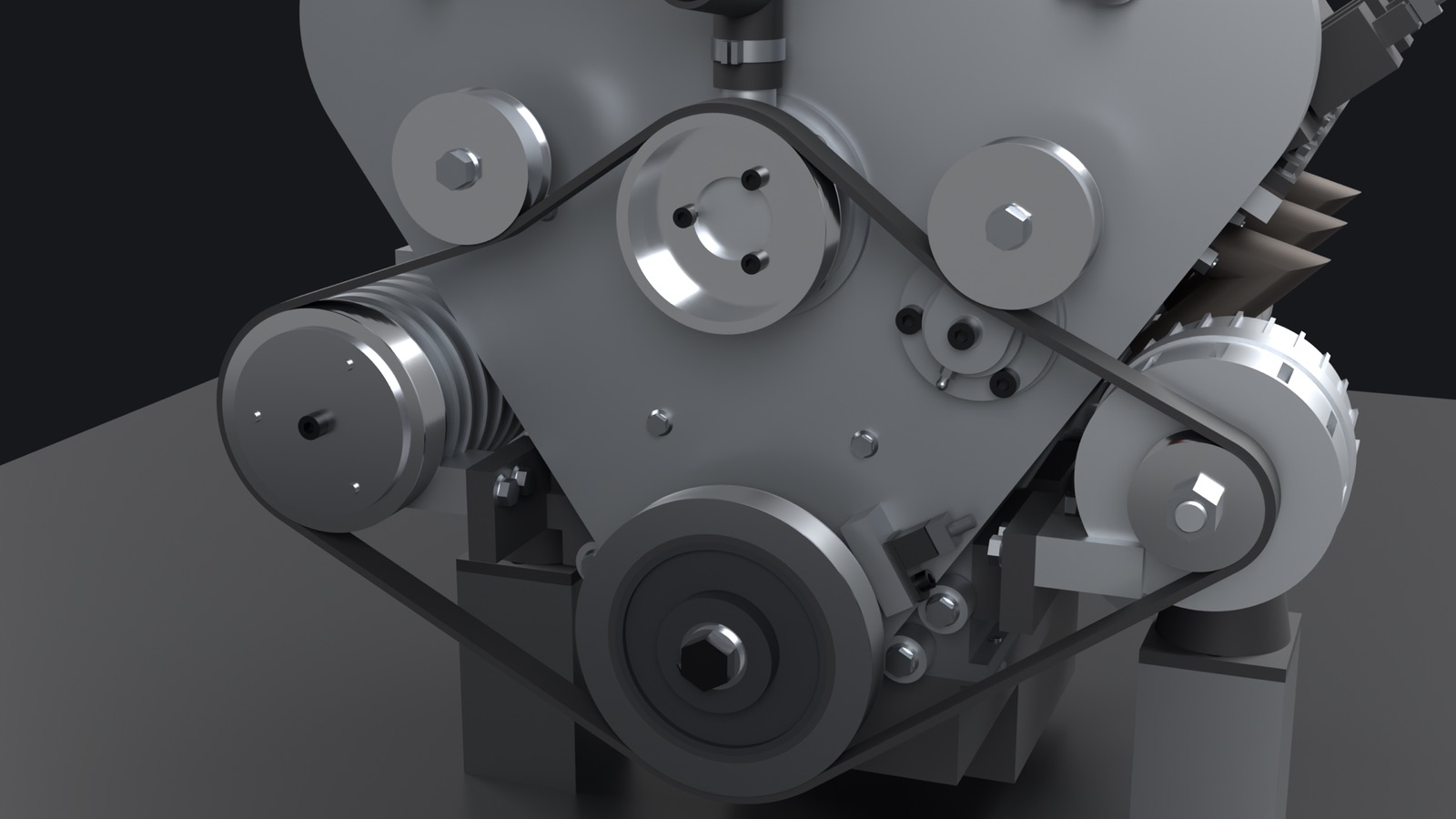
The accessory drive: one belt wraps the crank damper 63 degrees, the A/C 133, the alternator 119 and the water pump 73, with an idler and a tensioner. v6v2-front-drive, 2026-10-06
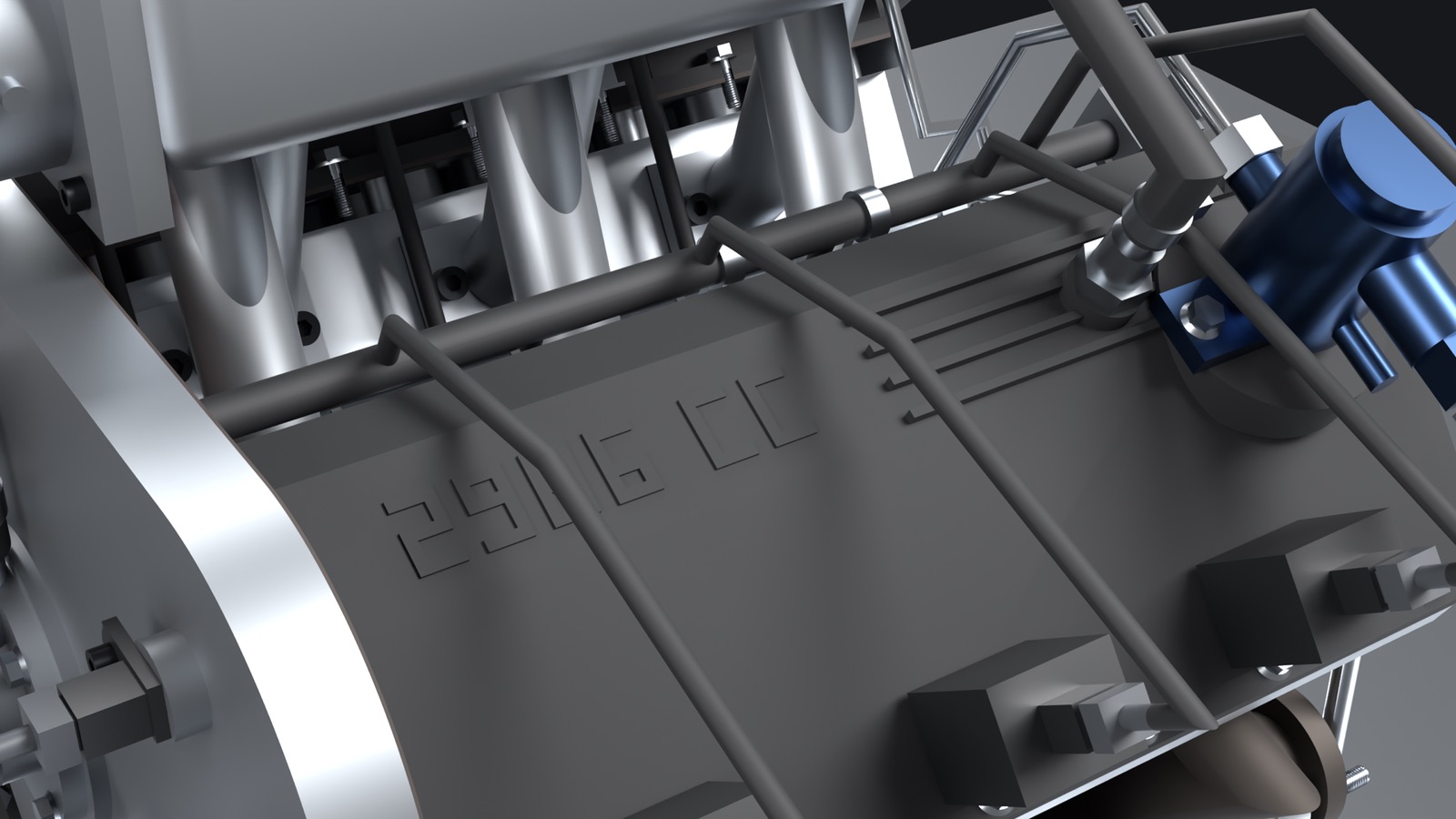
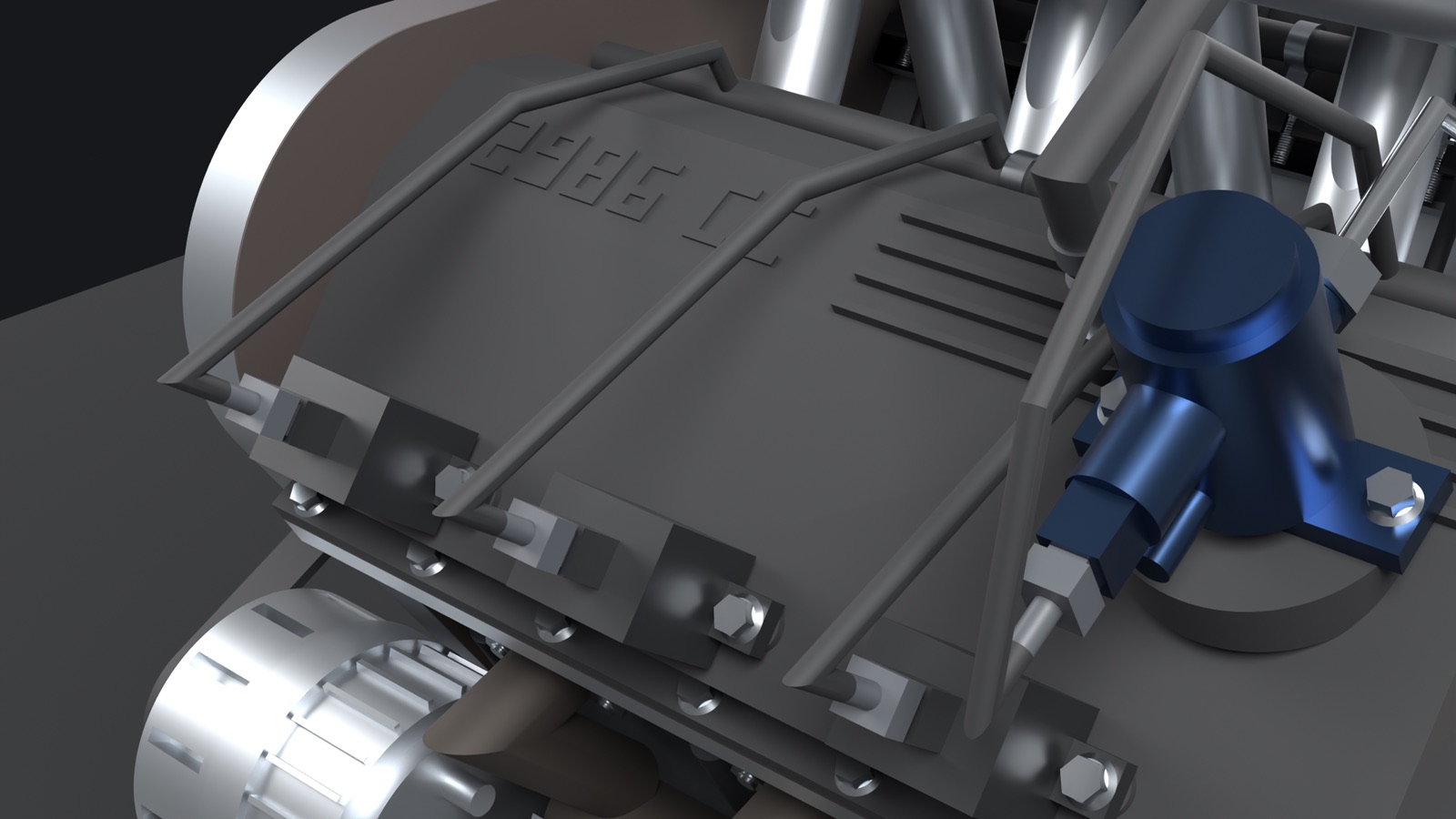
Bank A's cam cover: 14 M6 flange bolts in threaded taps, a 2 mm gasket, the raised 2986 CC, a PCV valve and the high-pressure pump. v6v2-cam-cover, 2026-10-06
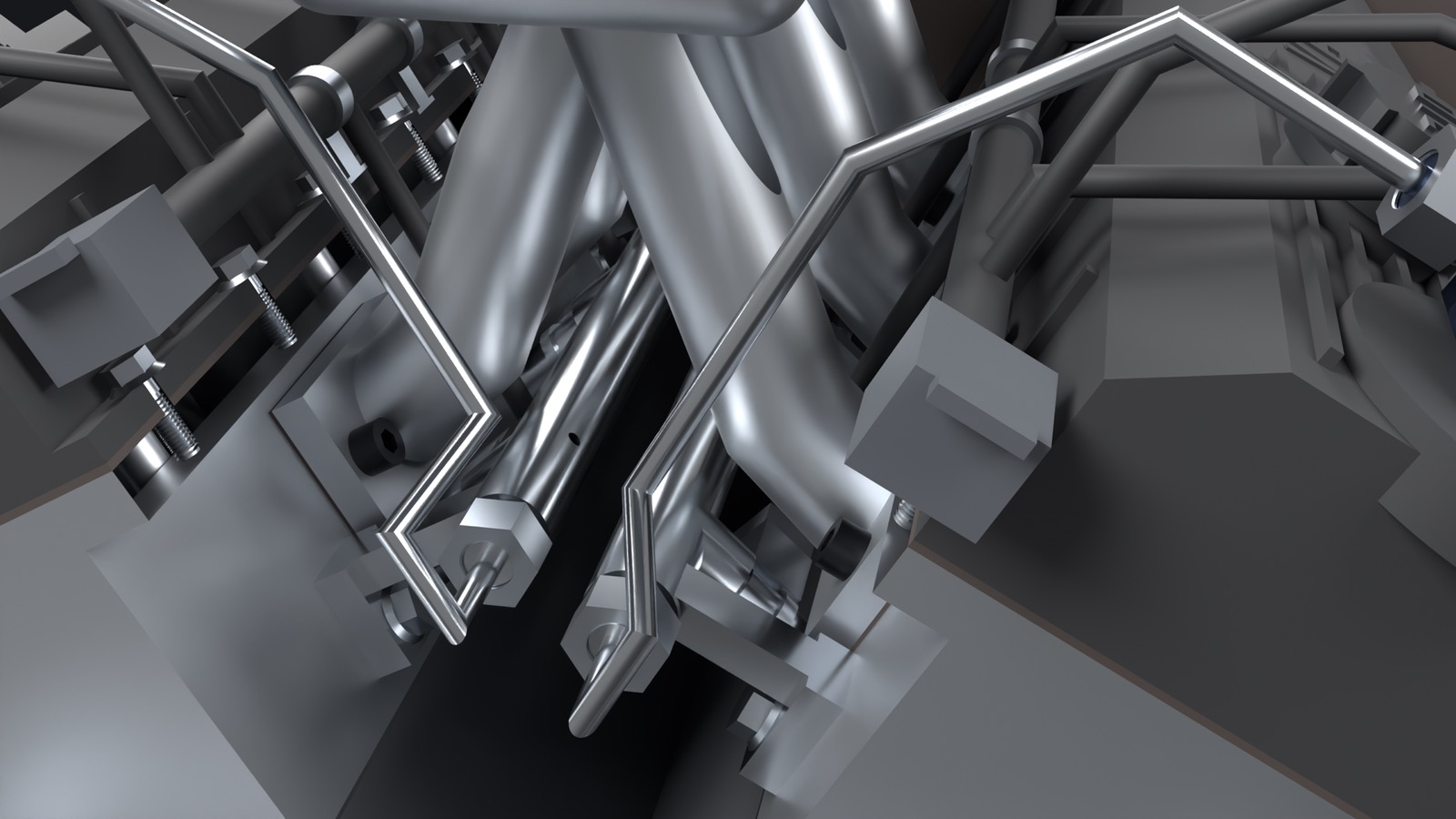
The fuel side in the valley: each bank's high-pressure line from its cam-driven pump to the rail, flare nuts at both ends. v6v2-rail, 2026-10-06
Coil-on-plug packs on bank A: each boot on its plug's terminal through the cover, each coil bolted to a threaded ear boss, the harness on clips. v6v2-coils, 2026-10-06
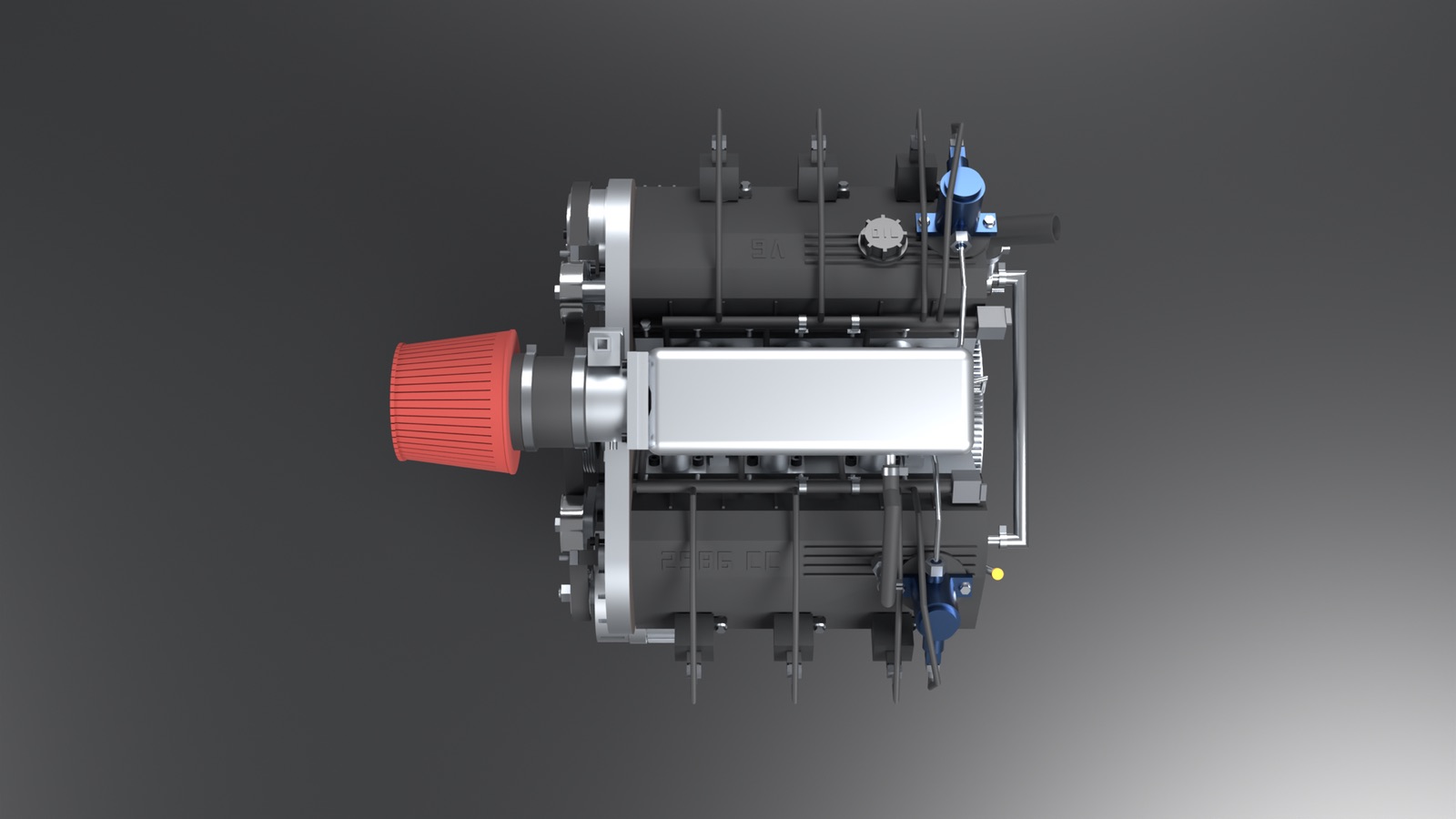
From above: the plenum and throttle between two black cam covers, six coil packs, the oil filler and the PCV valve. v6v2-top, 2026-10-06
What was checked
783 parts placed from 178 part files, each built by the kernel from its own spec.
226 fasteners, each placed on the axis of a threaded tap or a nut. Unpaired by the generator: 0.
152 of the 226 confirmed by the kernel: a cylinder along the thread shares volume with the tapped part, or a nut with its screw.
Interference: the kernel boolean on 18,387 part pairs in 642 assemblies, then 4,808 pairs in 120 assemblies after the last changes. 10 pairs share volume, 0.0139 mm3 in all, the largest 0.0015 mm3. Each is a face laid on a face.
Contact: 783 of 783 parts joined at a gap of 0.06 mm or less. Not joined: 0.
216 internal threads cut in the parts.
v6v2-audit, 2026-10-01
What was computed
Bore 89.0 mm, stroke 80.0 mm, rods 145 mm between centres, 60 degree V: 2986 cc.
Overall 658 x 662 x 708 mm, 194.9 kg.
Crank throws at 120 degrees. The pistons reach top centre in the order 1, 2, 3, 4, 5, 6, 120 degrees apart.
Timing chain: 9.525 mm roller chain, 142 links, every roller on a tooth seat over each wrap.
Belt: 6 ribs, 1327 mm. Wrap on the crank 63 degrees, A/C 133, idler 15, water pump 73, tensioner 13, alternator 119.
v6v2-audit, 2026-10-01
Reference
The Ford Duratec 30 / Mazda AJ 3.0 V6: 89.0 x 79.5 mm, 2967 cc, 60 degrees. The model is full size, 1:1, in the same class. Its throttle bore is 72 mm; a 3.0 V6 has 65 to 70 mm.
v6v2-audit, 2026-10-01
Not done yet
The passage from the water pump outlet into the block is not modelled. The pump sits on the timing cover, which carries the chain oil, so the passage would run in a separate casting.
74 of the 226 fasteners are not confirmed by the kernel test. Its common came back 0.0 mm3 for them. They stand on the generator placement and the contact scan.
The interference check leaves threads out, so thread engagement is not counted.
The audit is one frame of the mechanism study, with the crank at 118.853 degrees.
The low-pressure fuel feed stops at the pump nipple. The tank side is not modelled.
 Whet